
The first page opened with an article titled "THE INDIAN TRAINING SCHOOL," that described the progress of the school, its Christian methods, the work of the former Ft. Marion prisoners of war preparing buildings for use, the importance of the town Sunday Schools, the school curriculum that emphasized farmwork for boys and housekeeping for girls…
Printing Department
January 1880
Format:
Newspapers
Topics:
Repository:
National Archives and Records Administration

August 1880
An excursion to Warm Spring opened this edition, titled “The Camp at the Warm Springs” by John Downing (Cherokee). They hiked all day until they reached the Springs, picking black berries along the way and at one point believing they had gotten lost. This proceeded an editorial on the benefits of sending Indian children to school, which was…
Format:
Newspapers
Repository:
Cumberland County Historical Society
April 1881
The opening article was written by Michael Burns (Apache), and focused on “The Indian Question.” In it he explains how many Indians falsely believe that white men are wiser simply because they are born white, and argues that their wisdom comes not from their skin color, but from more easily accessed education. The second page gives some…
Format:
Newspapers
Topics:
Repository:
Cumberland County Historical Society
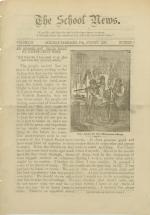
August 1881
The August edition opens with an article on the need to be useful the Carlisle Children feel, and how badly the writer felt when unable to work while sick. It continued onto page four. Page two brings Samuel Townsend (Pawnee) stepping down as editor with Charles Kihega (Iowa) taking his place. There is also pieces on the possibility of moving…
Format:
Newspapers
Repository:
Cumberland County Historical Society
February 1882
The first page had two articles on it. The first was by Johnson Lane about George Washington. The second was about various lost people and animals that the writer had met. Page two opens with Charles Kihega (Iowa) describing his tribe before and after coming under control of the agency. Another article talked about the Northern Arapahoe chief…
Format:
Newspapers
Topics:
Repository:
Cumberland County Historical Society
January 8, 1886
The first page opens with a poem titled “Smile Whenever You Can," followed by a lesson titled, "What Is Polite?" and a description of the life cycles of certain mammals. Page two features the "Forty-Ninth Congress" civics lesson comparing government to the Indian school’s debating clubs in which Congress would be debating the question of…
Format:
Newspapers
Topics:
Repository:
Cumberland County Historical Society
January 15, 1886
The first page opens with a poem titled "I'll Put It Off" followed by "A True Story of a Boy Frozen to Death." Also found on that page was an article titled "Look Up!" which was reprinted from the Industrial School Journal, about overcoming the urge to steal. Page two continues with news items dealing with wintery…
Format:
Newspapers
Topics:
Repository:
Cumberland County Historical Society
January 29, 1886
The first page opens with a poem titled "Who Was He?" asking students to come up with an answer for a prize of 25 cents; followed by a list of twelve steps for "How to Succeed." Page two includes many news items such as the weather, President Cleveland’s activities, a West Virginia coal mine accident, sloppy marching on campus, and a complaint…
Format:
Newspapers
Topics:
Repository:
Cumberland County Historical Society
February 12, 1886
The first page opems with a poem titled "Content," followed by "He Suffered Because He Could Not Speak English," an article about a Kiowa boy who was accused of a crime and could not defend himself. The next article is on the importance of buying insurance. Page two begins with a memorial about General Hancock titled "The Dead Hero," followed…
Nation:
Format:
Newspapers
Topics:
Repository:
Cumberland County Historical Society
March 12, 1886
The first page opens with a poem titled "Patient Holding Out,” by Alice Carey. It is followed by sets of twenty-two rules of behavior titled “What a Girl Should Learn” and "What a Boy Should Learn.” The page ended with a paragraph about labor strikes. Page two features many small news items such as descriptions about…
Format:
Newspapers
Topics:
Repository:
Cumberland County Historical Society
April 16, 1886
The first page opens with a poem titled "There's Danger," about the evils of drink. Next appears "In an Indian Camp: How to Cook Beans," adapted from the Cheyenne Transporter newspaper, about cleaning cooking utensils before using them. The article continues on page four. Page two includes "The Work of the Blind" that describes samples of…
Format:
Newspapers
Topics:
Repository:
Cumberland County Historical Society
June 11, 1886
The first page opens with a poem titled "I'm Not Too Young" reprinted from Scattered Seeds. The next article, "Hoe Handle Medicine" extolls the medicinal effects of exercise. Page two features several small stories, including Paul Eagle Star's (Sioux) outing assignment, a piece describing bicycles for men and tricycles for women, and a critique…
Format:
Newspapers
Topics:
Repository:
Cumberland County Historical Society
June 25, 1886
The first page opens with a poem titled “Be Honest and True," followed by the story of "Two Gentlemen," who showed good manners, the page ends with news about the new girls’ quarters being built. Page two included news about a visit from the Cumberland County Medical Association, new machinery for laundry, students departing for farms,…
Format:
Newspapers
Topics:
Repository:
Cumberland County Historical Society
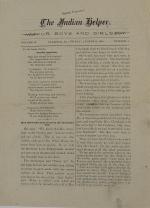
August 13, 1886
The first page opens with a poem titled "English Speaking," that discouraged students from speaking their native languages. The page also includes an article titled "How Miss Fisher went to Call on the President's Wife," that described Mrs. Fracnces Cleveland's dress and the decor of White House rooms in a visit by a Carlisle Indian School…
Nation:
Format:
Newspapers
Topics:
Discipline - Punishment, Student Social Events, Weather Events, News of Native American resistance, Building Repairs and Expansions, Native Americans Visiting the School, Industrial Training - Painting, Tennis at the school, Students Working on School Farms, Printing Department, Swimming at the school
Repository:
U. S. Army Heritage and Education Center
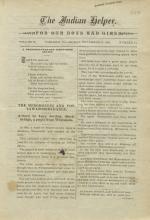
November 12, 1886
The first page opens with a poem titled "A Fourteen-Year-Old Girl's Good Advice," followed by an article called "The Menomonees and Pottawatomies Dance: A Story by Lucy Jordan, Stockbridge, a pupil from Wisconsin," that told of an 1882 visit by dancers to her home agency in Keshena, Wisconsin. Page two includes an offer of photographs for new…
Nation:
Format:
Newspapers
Topics:
Repository:
Cumberland County Historical Society
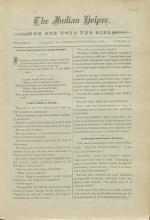
November 26, 1886
The first page opens with a poem titled "Sound Principle But Poor Poetry," followed by "A Boy Needs a Trade," about the degradation of a ditch digger reprinted from the Detroit Free Press. There is also an article called "A Sick Man who Wanted Whiskey." The second page includes a report in the shape of a turkey titled "Our Thanksgiving Turkey…
Format:
Newspapers
Topics:
Repository:
Cumberland County Historical Society
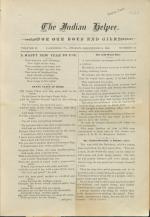
December 31, 1886
The first page opens with a poem titled "A Happy New Year to You," followed by a poem called "Santa Claus at Home," about his return to the North Pole. The next article, "The Cold Water Man," is about the dangers of drinking beer, reprinted from Maryland Bulletin. Also on the page is a piece titled "Mr. Causes-the-Wind, a Dakota says:" that…
Nation:
Format:
Newspapers
Topics:
Repository:
Cumberland County Historical Society
January 21, 1887
The first page opens with a poem titled "LA-MAH-NI," a story of an Indian man, followed by "A True Story About a Dog: Written for the Indian Helper" about a very smart dog. It continues on the fourth page. Page two includes small news items of national interest. There is a report that Jack Mather (Apache) was working in St. Augustine, Florida.…
Format:
Newspapers
Topics:
Repository:
Dickinson College Archives & Special Collections
November 25, 1887
The first page opened with a poem, "Thanksgiving Turkey," a play on the letters in the word "Turkey" followed by a description of the Acoma Pueblo by student Annie Thomas, entitled "A Queer Place To Live." This also was a subject of the article written about the monthly exhibition on page 3. The second page included news of students who…
Nation:
Format:
Newspapers
Topics:
Repository:
Dickinson College Archives & Special Collections
July 20, 1888
The first page opened with the poem “Be True” followed by an article titled “A Carlisle Teacher on the Big Ocean,” about a trip aboard the Steamer Aurania dated July 6th, 1888 written for the Man-on-the-band-stand by “A Carlisle,” aka Miss Lowe. The article concluded on the fourth page. Page two featured a variety of small newsy paragraphs that…
Nation:
Format:
Newspapers
Repository:
Dickinson College Archives & Special Collections
November 2, 1888
The first page opened with the poem, “Little Helpers,” reprinted from the Sunday School Times. Next came a piece titled “Environment,” the answer to the previously posted word story, followed by “No Time to Read?” about the importance of reading which continued on the fourth page. Page two reported a talk by Rev. Mr. Wilson about the…
Format:
Newspapers
Repository:
Cumberland County Historical Society
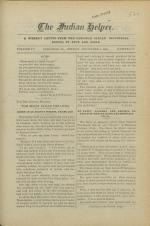
December 7, 1888
This issue opened with a poem titled “HOW," by John Boyle O'Reilly, followed by news from a letter from Carlisle alumnus Samuel Townsend (Pawnee), a student at Marietta College. Page two included news items about Congress convening, Nancy Cornelius (Oneida) attending the Woman's National Indian Association, new arrivals, "Thanksgiving Echoes…
Format:
Newspapers
Topics:
Repository:
Cumberland County Historical Society
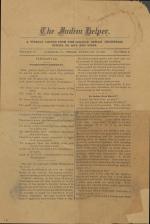
February 22, 1889
The first page began with the heading, “February 22,” followed by poems and articles about George Washington and his birthday. Also on the page was a piece called “Do Indian Boys Have It?” about the pitfalls of self-conceit. Page two included many small articles that included an update of area postal routes, a description of Eugene Tahkapeur’s…
Format:
Newspapers
Topics:
Repository:
Dickinson College Archives & Special Collections
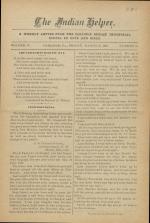
March 29, 1889
The first page opened with a poem "The Voice That Wins Its Way" contributed by Hannah E. Wilson, followed by a piece called "From John Dixon" which was reprinted from the Albuquerque Indian School where Dixon (Pueblo) was employed as a carpenter and translator for Indian school recruitment. The article continued on page four. Page two offered…
Format:
Newspapers
Topics:
Repository:
Cumberland County Historical Society
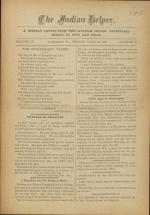
April 26, 1889
The first page opened with a poem "The Printer-Boy Tramp” by Will Carleton, followed by “Encouraging Prospects” about Luther Kuhns at the Pawnee Agency. Next came “A Man Who was not Afraid to Work” on how General Washington set an example for his corporal. Also on the page was an article titled “Easter Eggs in Washington.” Page two contained a…
Nation:
Format:
Newspapers
Topics:
Repository:
Cumberland County Historical Society