
A description of this document is not currently available.
Indian Helper, The (1885-1900)
September 10, 1886
Format:
Newspapers
Repository:
U. S. Army Heritage and Education Center
September 17, 1886
A description of this document is not currently available.
Format:
Newspapers
Repository:
U. S. Army Heritage and Education Center
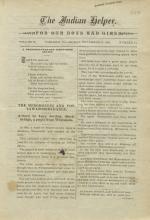
November 12, 1886
The first page opens with a poem titled "A Fourteen-Year-Old Girl's Good Advice," followed by an article called "The Menomonees and Pottawatomies Dance: A Story by Lucy Jordan, Stockbridge, a pupil from Wisconsin," that told of an 1882 visit by dancers to her home agency in Keshena, Wisconsin. Page two includes an offer of photographs for new…
Nation:
Format:
Newspapers
Topics:
Repository:
Cumberland County Historical Society
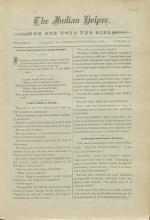
November 26, 1886
The first page opens with a poem titled "Sound Principle But Poor Poetry," followed by "A Boy Needs a Trade," about the degradation of a ditch digger reprinted from the Detroit Free Press. There is also an article called "A Sick Man who Wanted Whiskey." The second page includes a report in the shape of a turkey titled "Our Thanksgiving Turkey…
Format:
Newspapers
Topics:
Repository:
Cumberland County Historical Society
December 3, 1886
The first page opens with a poem titled “"Health Alphabet" listing health advice, A-Z followed by a description of horse grooming titled "George Washington's Horse." Page two opens with an article titled "Silver" that admonished Indian students to fight against the…
Format:
Newspapers
Topics:
Repository:
Cumberland County Historical Society
December 10, 1886
The first page opens with a poem titled "Much Depends on Your Aiming," about keeping to the straight path, followed by "A Boy Froze to Death While On Duty," about the effects of an ice storm on Lake Michigan followed by "Moved Again," in which the Man-on-the-band-stand opined that Indians who are not educated have no say in decisions made about…
Nation:
Format:
Newspapers
Topics:
Apache Prisoners of War (1886-1887), Christmas, Weather Events, Citizenship for Native Americans, Native Americans Visiting the School, Press Coverage of the School, School Band, Building Repairs and Expansions, School Employees - Illness, Students Speaking English, Taking Photographs of the School and Students
Repository:
Cumberland County Historical Society
December 24, 1886
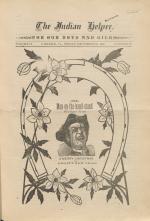
The first page opens with the school Christmas greeting that included a drawing of the Man-on-the-band-stand that took up the entire front page of the newspaper. Page two features an article titled "Christmas" that described the Fourth of July and Christmas as national holidays, followed by articles including news from the Pawnee Agency…
Format:
Newspapers
Repository:
Cumberland County Historical Society
December 31, 1886
The first page opens with a poem titled "A Happy New Year to You," followed by a poem called "Santa Claus at Home," about his return to the North Pole. The next article, "The Cold Water Man," is about the dangers of drinking beer, reprinted from Maryland Bulletin. Also on the page is a piece titled "Mr. Causes-the-Wind, a Dakota says:" that…
Nation:
Format:
Newspapers
Topics:
Repository:
Cumberland County Historical Society
January 21, 1887
The first page opens with a poem titled "LA-MAH-NI," a story of an Indian man, followed by "A True Story About a Dog: Written for the Indian Helper" about a very smart dog. It continues on the fourth page. Page two includes small news items of national interest. There is a report that Jack Mather (Apache) was working in St. Augustine, Florida.…
Format:
Newspapers
Topics:
Repository:
Dickinson College Archives & Special Collections
February 11, 1887
The first page opens with the poem, "New Every Morning" by Susan Coolidge, followed by "Good Words from a Blind Young Man," which was a typewritten letter sent by Joseph Link, student of the Institution of the Blind, to Charles Wheelock (Oneida). There is also an article reprinted from the Truckee (Cal.) Republican, titled "Indian Ahead of…
Format:
Newspapers
Topics:
Repository:
Cumberland County Historical Society
February 18, 1887
The first page opened with the poem, "You Conquer Me, Me Conquer You" followed by a letter from Rev. Edward F. Wilson of the Shingwauk Home titled "An Indian School in Canada," which described Wilson’s report to the Indian Department of Canada on his visit to Carlisle, the Lincoln Institute and the Hampton Institute. It continued on the last…
Format:
Newspapers
Repository:
Cumberland County Historical Society
February 25, 1887
The first page opened with a poem titled “New Every Morning,” followed by "An Indian Woman Fought For Her Husband After Receiving a Beating From Him" which concluded on the fourth page. Page two gave news from the Chemawa and Genoa Indian Schools, and "A Nice Pocket Book for the Best," asking for wish lists from the trade departments. Next came…
Format:
Newspapers
Repository:
Dickinson College Archives & Special Collections
March 4, 1887
The first page opened with a poem titled “So Say We, All of Us Girls,” followed by “The Indian’s Hair Would Not Curl,” by Aunt Martha that recalled a comical hair care story involving Aunt Martha’s friend and a visiting Indian chief. “From a Former Student of Carlisle” reprinted a letter to Capt. Pratt from former student Frank Aveline (Miami)…
Format:
Newspapers
Repository:
Dickinson College Archives & Special Collections

March 11, 1887
The first page opened with a poem titled “Take Care,” by Alice Cary, followed by a report of “An Old Osage,” that blamed the poor conditions on the reservations on the lack of schooling. The article, written by “Aunt Martha,” concluded on the fourth page. Page two opened with “God Helps Those Who Help Themselves,” reporting the efforts of the…
Format:
Newspapers
Repository:
Dickinson College Archives & Special Collections
March 18, 1887
The first page opened with a poem titled “Take the Sunny Side,” by “Ex.” Also found on that page was “An Interesting Letter from John Dixon, One of Our Pueblo Boys Who Went to His Home in New Mexico Last Summer” addressed to Mr. Campbell. Dixon wrote about celebrating George Washington’s birthday, looking for railroad work and visiting the…
Format:
Newspapers
Repository:
Dickinson College Archives & Special Collections
March 25, 1887
The first page opened with a poem titled “The Girls that are Wanted,” author unknown, followed by “An Indian Dance: By Dessie Prescott, One of Our Pupils.” Also on the page was an article about the importance for Americans to know their history. Page two opened with a treatise on patriotism, followed by a report by Joshua Given that the…
Format:
Newspapers
Repository:
Dickinson College Archives & Special Collections

April 1, 1887
The first page opened with a poem titled “The Boy and the Bird,” author undetermined. The next article was titled “How the Indian School Girls in Sitka, Alaska, Got Ahead of the Indian Boys,” which concluded on the fourth page. Page two contained articles about returned students, John Davis (Pueblo) writing from his country home, and a piece…
Format:
Newspapers
Repository:
Dickinson College Archives & Special Collections
April 8, 1887
The first page opened with a poem titled “To Tell a Good House-Keeper,” reprinted from The New Moon. Also on the page was an account by Johnnie Schmoker about bird hunting at the Cheyenne and Arapaho School in Oklahoma titled “INCIDENTS OF SCHOOL WORK AMONG THE CHEYENNES AND ARAPAHOES, IN THE INDIAN TERRITORY, WHEN THEY WERE REALLY…
Format:
Newspapers
Repository:
Dickinson College Archives & Special Collections
April 15, 1887
This issue opened with a poem titled “THE HORSE’S PETITION,” followed by an alphabet poem titled “HOW TO GET RICH AND BECOME FAMOUS.” “TRUE COURAGE” offered a treatise on the rewards of kindness. Page two opened with news of a measles outbreak at the Ponca Agency, the influence of Carlisle students at the Crow Reservation, a report on the…
Format:
Newspapers
Repository:
Dickinson College Archives & Special Collections
April 22, 1887
This issue opened with a poem titled “Kindness” followed by a reprint from the Word Carrier, “Manners” that compared ill-mannered behavior to animal traits and was intended as a lesson to Carlisle students. Also on that page was a paragraph reprinted from the Genoa Indian School describing a farming contest challenge between the Genoa…
Format:
Newspapers
Repository:
Dickinson College Archives & Special Collections
April 29, 1887
This issue opened with a poem titled “For Us, As Well as Others,” by Mary H. Krout, followed by “A True Story” shared by “Aunt Martha” about some mistaken identities among the Sioux and Pawness in Nebraska. The story continued on the fourth page. Page two included a reprint of Carlos Montezuma’s letter from Chicago dated April 24, 1887 titled “…
Format:
Newspapers
Repository:
Dickinson College Archives & Special Collections
May 6, 1887
The Indian Helper opened with a poem titled “A New Citizen,” written by Elsie Fuller (Omaha) who was a student at Hampton Institute, reprinted from “Talks and Thoughts.” The next article was an explanation of the Dawes Act written by Sen. Henry Dawes and titled “THE LAND IN SEVERALTY BILL MADE EASY TO UNDERSTAND.” Page two was taken up…
Format:
Newspapers
Repository:
U. S. Army Heritage and Education Center
May 13, 1887
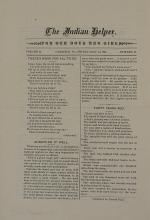
This issue opened with a poem titled “THERE’S WORK FOR ALL TO DO,” followed by an article titled “ALWAYS DO IT WELL,” espousing the value of diligence and care no matter how important the job. The final article on the page was titled “FORTY YEARS AGO,” that continued on page four and listed technological changes made over a forty year span of…
Format:
Newspapers
Repository:
U. S. Army Heritage and Education Center
May 20, 1887
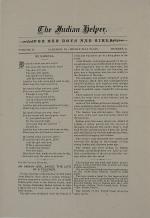
This issue opened with a poem titled “BE CAREFUL,” followed by an account of how “Aunt Martha” nearly drowned near the Genoa School in Nebraska titled “AN INDIAN GIRL SAVED THE LIFE OF A TEACHER,” followed by a reprint from The Indian Citizen that extolled the competence of Indian boys. Page two featured small news items that included…
Format:
Newspapers
Repository:
U. S. Army Heritage and Education Center
May 27, 1887
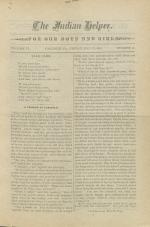
The first page opened with the poem "Take Care" followed by "A Visitor at Carlisle" which provided the opportunity to present arguments for Indian education away from the reservations. It continued on page four. Page two opened with an account of a presentation by "Dr. Harmon and Col. Thomas," a Dickinson College professor and his former…
Format:
Newspapers
Topics:
Repository:
Cumberland County Historical Society