
The first page opems with a poem titled "Content," followed by "He Suffered Because He Could Not Speak English," an article about a Kiowa boy who was accused of a crime and could not defend himself. The next article is on the importance of buying insurance. Page two begins with a memorial about General Hancock titled "The Dead Hero," followed…
Visits by Notable People
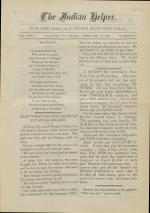
February 12, 1886
Nation:
Format:
Newspapers
Topics:
Repository:
Cumberland County Historical Society
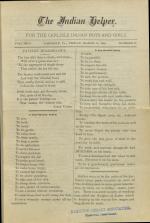
March 12, 1886
The first page opens with a poem titled "Patient Holding Out,” by Alice Carey. It is followed by sets of twenty-two rules of behavior titled “What a Girl Should Learn” and "What a Boy Should Learn.” The page ended with a paragraph about labor strikes. Page two features many small news items such as descriptions about…
Format:
Newspapers
Topics:
Repository:
Cumberland County Historical Society
July 1893
Pamphlet printed by the school's print shop of the speech given by Frederick Douglass at the school on April 6, 1893. The Indian Helper for July 21, 1893 announced that it was available at the price of ten cents.
Douglass' speech, "Self-Made Men," was a famous one, first delivered by him in…
Format:
Pamphlet
Repository:
Library of Congress, Manuscript Division
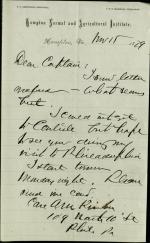
November 11, 1879
Samuel Chapman Armstrong of the Hampton Institute writes to Richard Henry Pratt to make arrangements for Armstrong to visit Carlisle while in Philadelphia.
Format:
Letters/Correspondence
Topics:
Repository:
Yale University Beinecke Rare Book & Manuscript Library
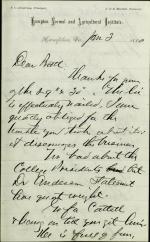
January 3, 1880
Samuel Chapman Armstrong of the Hampton Institute writes to Richard Henry Pratt about their efforts to build public support for their work via college presidents, notable figures, and newspaper articles.
Format:
Letters/Correspondence
Repository:
Yale University Beinecke Rare Book & Manuscript Library
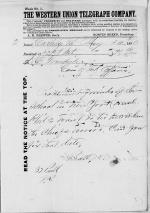
April 24, 1880
Richard Henry Pratt asks Commissioner of Indian Affairs R. E. Trowbridge to set the date when chiefs visit the Carlisle Indian School so that "friends of the school" can visit at the same time.
Note: This item was copied from U.S. National Archives microfilm reels (M234), which were filmed from the original documents found in Record…
Format:
Letters/Correspondence
Repository:
National Archives and Records Administration
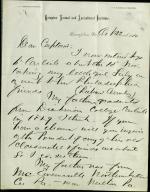
October 22, 1880
Samuel Chapman Armstrong of the Hampton Institute writes to Richard Henry Pratt about plans to visit Carlisle, as well as Dickinson College, where Armstrong's father Richard had attended.
Format:
Letters/Correspondence
Topics:
Repository:
Yale University Beinecke Rare Book & Manuscript Library
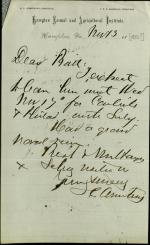
November 13, 1880
Samuel Chapman Armstrong writes to Richard Henry Pratt informing him of his departure and expected arrival date for a visit to Carlisle.
Format:
Letters/Correspondence
Topics:
Repository:
Yale University Beinecke Rare Book & Manuscript Library
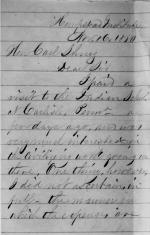
November 16, 1880
E. Hind states that he recently visited the Carlisle Indian School and was very impressed by the work being done there. He asks for information on how the school pays its expenses and for specific details on the Civilization Fund.
Note: This item was copied from U.S. National Archives microfilm reels (M234), which were filmed from the…
Format:
Letters/Correspondence
Repository:
National Archives and Records Administration
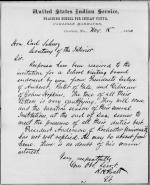
November 18, 1880
Richard Henry Pratt informs Secretary of the Interior Carl Schurz that the presidents of Amherst, Yale, Johns Hopkins, and Rochester universities are all invited and will visit the Carlisle Indian School near the end of December.
Note: This item was copied from U.S. National Archives microfilm reels (M234), which were filmed from the…
Format:
Letters/Correspondence
Topics:
Repository:
National Archives and Records Administration
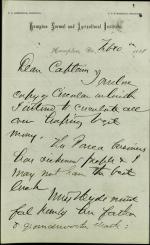
February 10, 1881
Samuel Chapman Armstrong of the Hampton Institute writes to Richard Henry Pratt enclosing a soon-to-be-distributed circular (missing from the file), and discussing both the Ponca party of visitors and Armstrong's hopes to take a delegation of students to Washington.
Nation:
Format:
Letters/Correspondence
Repository:
Yale University Beinecke Rare Book & Manuscript Library
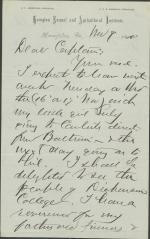
November 9, 1882
Samuel Chapman Armstrong of the Hampton Institute writes to Richard Henry Pratt with trip logistics for Armstrong's visit to Carlisle, including an expressed desire to meet with supporters at Dickinson College.
Format:
Letters/Correspondence
Topics:
Repository:
Yale University Beinecke Rare Book & Manuscript Library
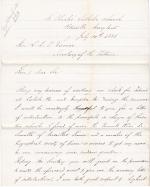
July 30, 1885
D. C. De Wulf, pastor for the St. Charles Church in Pikesville, Maryland, requests a letter of introduction in order to visit the Carlisle Indian School and Hampton Institute along with the visitors from France.
Format:
Letters/Correspondence
Topics:
Repository:
National Archives and Records Administration
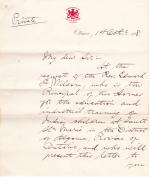
October 1-30, 1888
Letters of introduction for Edward F. Wilson the principal of two homes for the education and industrial training of Indian children at Sault Ste. Marie in Ontario, Canada. One of the letters is from Richard Henry Pratt who notes that he has known Wilson personally for two years and that he hopes the Office can provide a favorable introduction…
Format:
Letters/Correspondence
Repository:
National Archives and Records Administration
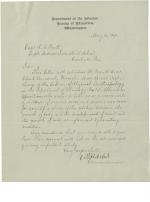
May 16, 1891
Commissioner of the U.S. Department of the Interior Bureau of Education William Torrey Harris writes to Richard Henry Pratt to introduce Dr. Franz Boas, Special Assistant in charge of Physical Anthropology for the Department of Ethnology for the World's Columbian Exposition. Dr. Boas's letter of introduction notes his desire to take a variety…
Format:
Letters/Correspondence
Topics:
Repository:
Yale University Beinecke Rare Book & Manuscript Library
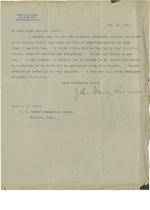
November 26, 1900
John Henry Barrows, the President of Oberlin College, writes to Richard Henry Pratt thanking him for hosting his visit to Carlisle and recommending that Pratt's daughter attend Oberlin.
Format:
Letters/Correspondence
Topics:
Repository:
Yale University Beinecke Rare Book & Manuscript Library
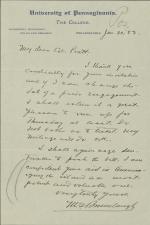
January 30, 1903
Martin Grove Brumbaugh writes to Richard Henry Pratt acknowledging an invitation to visit Carlisle, and making plans to visit if possible. Brumbaugh also notes his support for Pratt's efforts.
Format:
Letters/Correspondence
Topics:
Repository:
Yale University Beinecke Rare Book & Manuscript Library
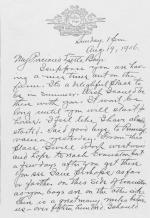
August 19, 1906
The father of Matthew and Wendell Jones describes his visit to the Carlisle Indian School. He discusses the games many of the students played as well as the work that was being done on the school grounds.
Also included is a letter from the widow of Wendell Jones noting that she had made a copy of the letter in 1988.
Format:
Letters/Correspondence
Topics:
Repository:
Cumberland County Historical Society
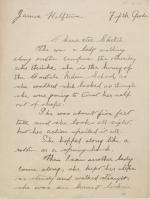
1909
Three character sketches by students of the Carlisle Indian School. James Halftown describes two women who visited the campus, Jessie Rowland writes about a large gentleman, and Guy describes a female teacher.
Note: Guy is probably Guy Plenty Horse.
Format:
Student Schoolwork
Repository:
Cumberland County Historical Society